

This post may contain affiliate links, please see our privacy policy + disclosures for details.


Master the art of how to grill steak—whether you’re firing up the gas, coaxing smoke from charcoal, or wielding a cast-iron grill pan on the stovetop. This foolproof method covers cuts from skirt steak to ribeye, plus tips on seasoning, searing, and resting for a juicy finish every time!
For extra flavor, tenderness, and pure pizazz, check out my incredible steak marinade recipe and finish off with this creamy au poivre sauce!

Table of Contents
- Why This Method Deserves Your Time
- Why This ‘Steaking Point’ Is a Winner
- What You’ll Need
- Variations
- How to Grill Steak Perfectly
- Understanding Carryover Cooking
- Recipe FAQs
- How to Strut That Steak
- Flavor Build-Up vs. Over-Flare
- Expert Tips
- More Beefy Bliss Waiting for You
- How to Grill Steak Perfectly Every Time {Indoors & Out} Recipe
Why This Method Deserves Your Time
Few things beat the sizzle of a perfectly grilled steak—except maybe the first bite. Whether you’ve got a propane-powered gas grill on your deck, a backyard charcoal setup, or a trusty cast-iron grill pan, this works seamlessly to show you how to grill steak to tender, juicy perfection every time. From choosing a cut with great marbling (hello, ribeye and strip steak) to getting that crusty sear (like on my skirt steak in these images!), you’ll be slicing into steakhouse quality at home.
Why This ‘Steaking Point’ Is a Winner
- High-heat sear on direct heat locks in juices and builds a flavorful crust.
- Salt-and-rest method (pat dry, salt early, marinate or don’t, let come to room temperature) guarantees even seasoning and a tender bite.
- Covers charcoal grill, gas grill, and cast-iron grill pan techniques—for both indoor and outdoor scenarios.
What You’ll Need
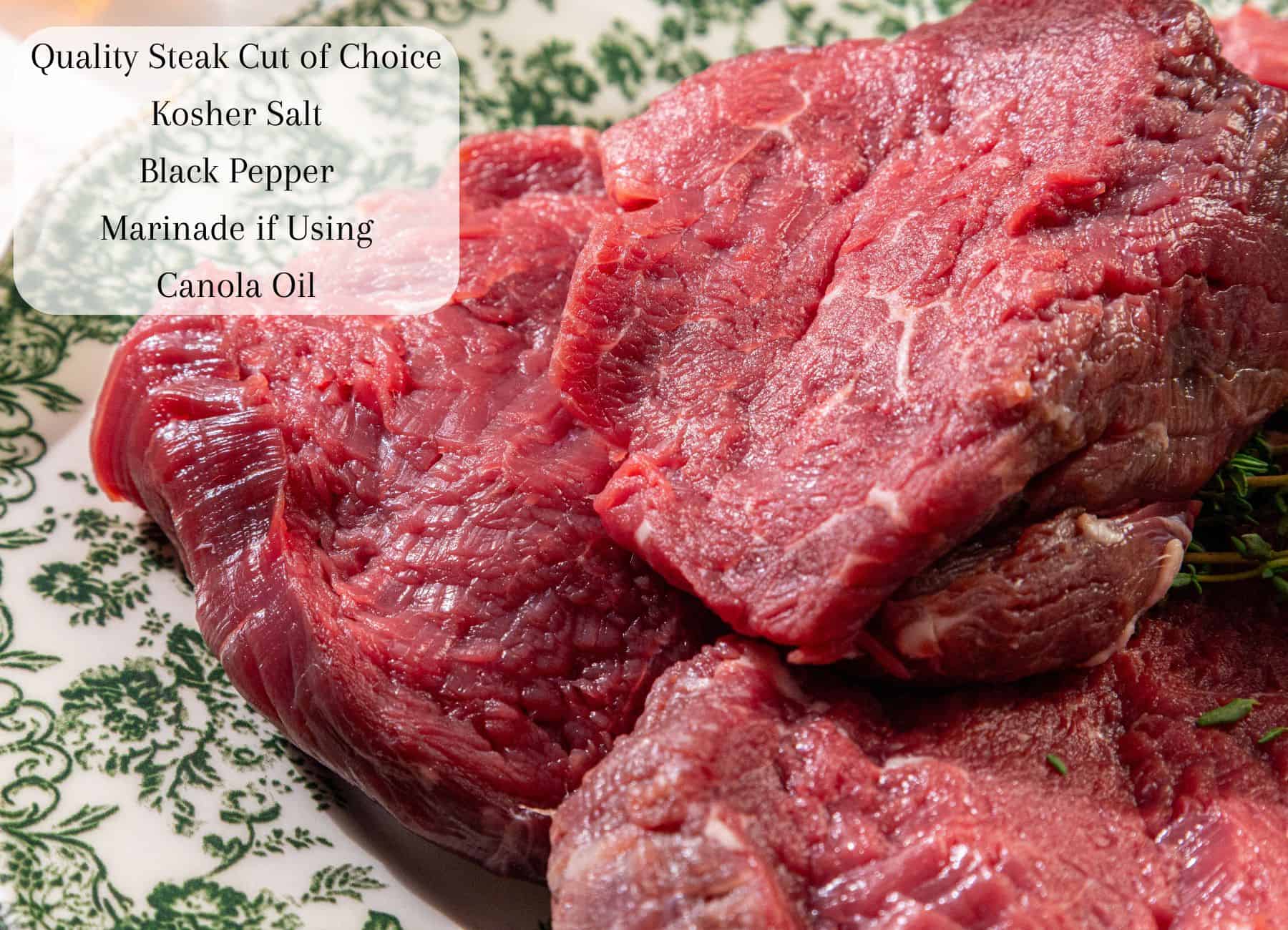
Key ingredients for a knockout steak:
- 1–1½” thick skirt steak, flank steak, hanger steak, ribeye, strip steak, T-bone, or porterhouse.
- Kosher salt & freshly ground black pepper.
- Optional: marinade, butter, garlic, fresh herbs (thyme, rosemary) for basting, or sauce of choice for finishing.
- High-smoke-point oil (canola, avocado).
- Meat thermometer for checking internal temperature.
See recipe card for full information on ingredients and quantities.
Variations
- Reverse sear: Slow roast in oven, then sear in cast-iron pan for a thick steak.
- Herb-compound butter: Swap plain butter for garlic-parsley mix.
- Dry rub: Use Montreal steak seasoning or smoked paprika blend.
- Lean cuts: Use tri-tip, top sirloin, or flank steak—just adjust cook time.
- Diet swaps: Gluten-free rubs or dairy-free herb oils.
How to Grill Steak Perfectly
Whether you’re firing up the backyard grill or heating things up indoors with a cast iron grill pan, this method delivers mouthwatering results. My photos showcase the indoor grill pan technique; refer to the NOTES section of the recipe card for both outdoor charcoal and gas grill instructions.
Scroll down for the full printable recipe or stick around for the step-by-step breakdown with photos to walk you through every delicious detail.
1
Marinate
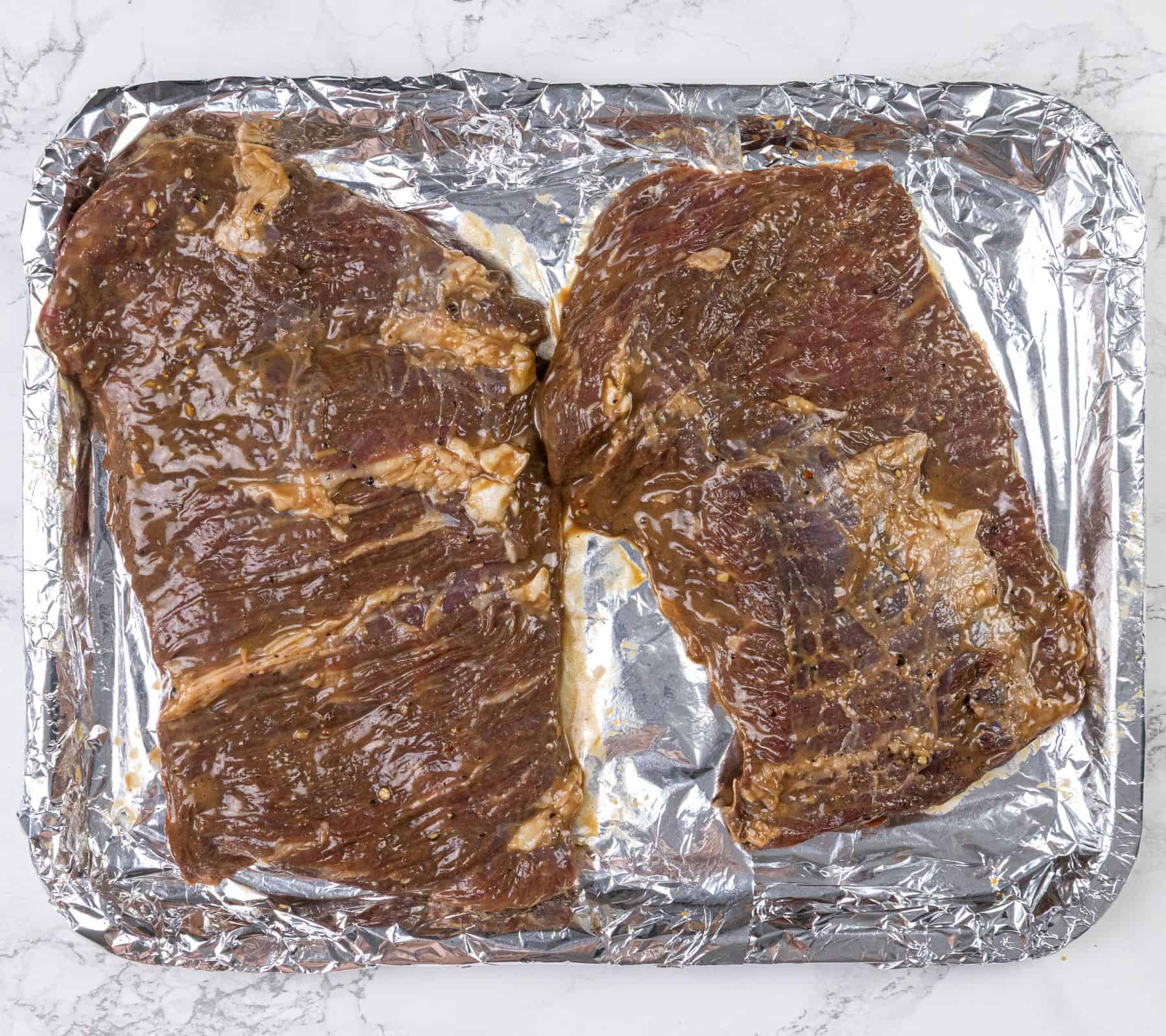
I always whip up a marinade—because acid and salt get that steak juicy and flavorful, and a little oil carries the good stuff while helping get that crust you crave. Tough cuts like skirt, flank, and sirloin shine with a longer soak—think 8–12 hours (or overnight)—but if you’re short on time, 4–6 hours is your sweet spot: more flavor, more tenderness, no mush. Simply pat your steaks dry, then salt and pepper on all sides before submerging in marinade for the suggested time.

2
While the Pan Heats…
For a marinated steak, whisk it out of the fridge and let it hang out while your grill pan gets smoking—can’t build a great crust on cold meat. JUST BEFORE SEARING, brush the pan with canola oil—not too much—just enough to shimmer. Canola’s high smoke point helps your steak sear crisp without frying it or setting off the smoke alarms.
Cooking without a marinade? Simply hit your steak with Kosher salt and cracked black pepper—plenty of flavor and none of the extra liquid. Let it sit at room temp for at least 30 minutes, or ideally up to 45 minutes (dry-brine time, folks). This gives the salt time to do its magic—pulls juices out and then lets them absorb back in, flavor-deep and tender-crust ready.
3
Sear
Heat your pan until its surface hits about 400–450 °F. Brush with minimal canola oil. Sear your steak until it’s gorgeously brown—that Maillard crust adds all the flavor, even if it doesn’t ‘lock in the juices’ (that’s kitchen myth-busting gold).
- Thin steaks (around 1- inch thick): Sear ~3–4 minutes per side or 5 minutes first side + 3 minutes second side to hit a 130–135 °F medium-rare.
- Mid-thickness steaks (~1.5-inches): Go for 4–5 minutes per side or 6 minutes first side + 4 minutes second side for a 135–145 °F medium finish.
- Ultra-fast sear (reverse sear combo): If you’ve pre-cooked your steak using the reverse sear method (like in an oven at low heat until nearly done), finish it in a blazing hot pan for just 1–2 minutes per side to form a crust. Note: this quick sear is only to finish the steak—not to cook it from raw.

4
Rest
Fold foil around the steak on a cutting board and let your steak rest for 8-10 minutes after cooking—muscle fibers relax, juices settle back in instead of running away, and carryover cooking gently brings it to perfection.

Understanding Carryover Cooking
Carryover Cooking – You may pull your steak off the heat early, but don’t worry—it’ll sneak up on you. Heat from the edges keeps cooking inward, typically raising internal temps by 5–10 °F—so your steak finishes perfectly during its brief rest.
5
Cut
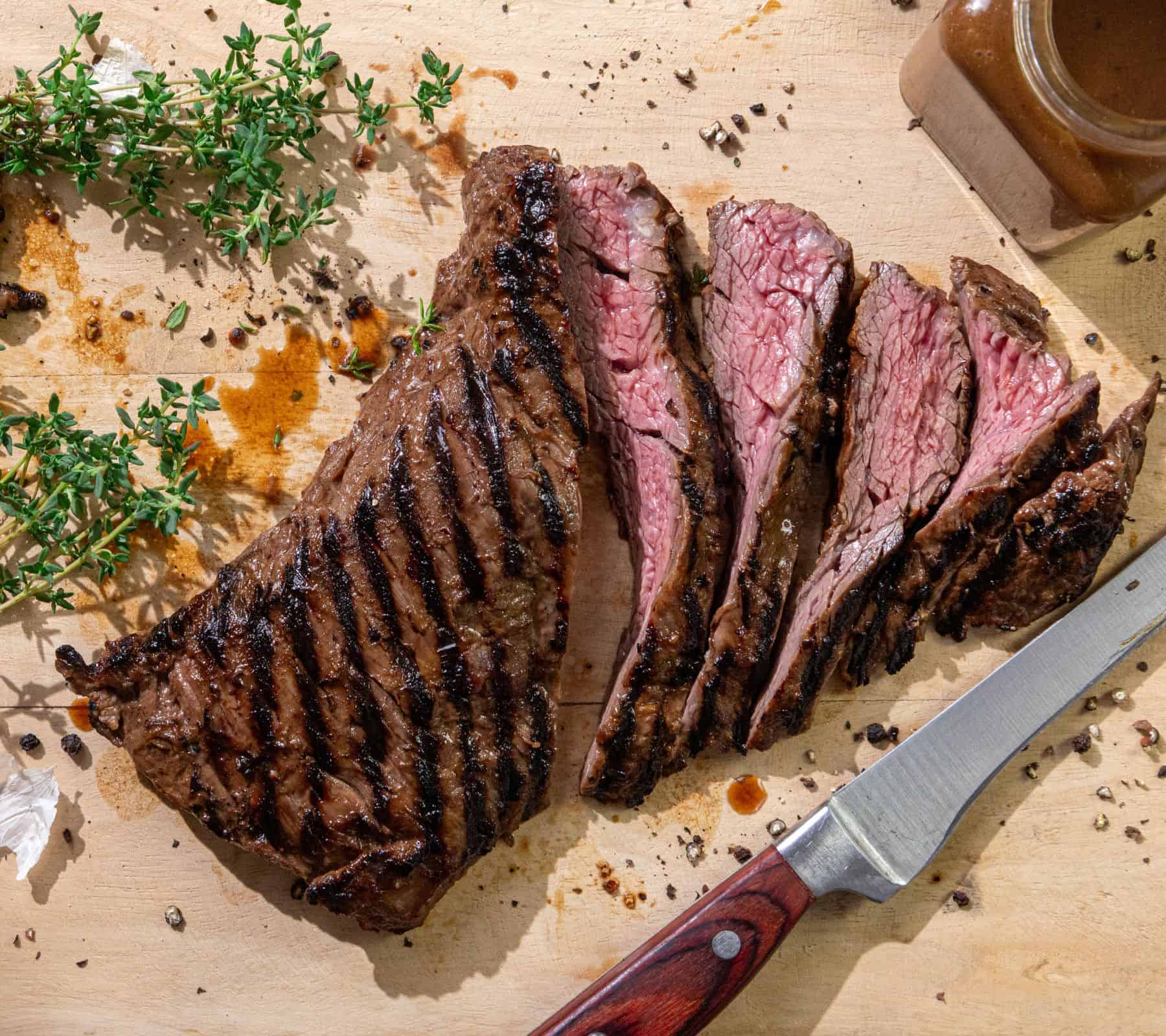
Always slice against the grain, that is, slicing perpendicular to the direction of muscle fibers. This technique is especially crucial for tougher cuts like flank, skirt, and hanger steaks, where muscle fibers are longer and denser. By cutting against the grain, you ensure that the muscle fibers are broken into shorter segments, enhancing the steak’s tenderness and improving the overall eating experience.
Recipe FAQs
Estimated Grilling Times for a 1-Inch Thick Steak (Over High Heat)
Always use an instant-read thermometer to verify doneness.
Rare (120–130°F): ~3 minutes per side
Medium-rare (130–135°F): ~3–4 minutes per side
Medium (135–145°F): ~4–5 minutes per side
Medium-well (145–155°F): ~5–7 minutes per side
Well-done (155°F+): ~8–9 minutes per side
Caveat: Keep in mind that meat continues to cook after it’s removed from the heat—this is called carryover cooking. To avoid overcooking, pull your steak off the grill or pan when it’s a few degrees below your target temperature.
On a Charcoal or Gas Grill:
1. Set up two zones:
Hot zone (direct heat) for searing.
Cool zone (indirect heat) for finishing.
2. Sear steak over direct heat for 2–3 minutes per side.
3. Move to indirect heat, cover the grill, and cook until it reaches target internal temperature.
On a Grill Pan:
1. Sear on the stovetop for 2–3 minutes per side.
2. Transfer to a 375°F–400°F oven to finish cooking.
Use a meat thermometer to monitor internal temp.
The “Rule of 3” involves:
3 minutes over direct high heat on one side.
Flip and grill for another 3 minutes on the other side.
Move the steak to indirect heat and cook for an additional 3 minutes per side.
This method combines searing with indirect cooking to achieve a perfect crust and desired internal temperature.
For novice grillers:
Choose the right cut: Opt for steaks like skirt, ribeye or strip, which are forgiving and flavorful.
Preheat your grill: Ensure it’s hot before placing the steak on it.
Season simply: Use kosher salt and freshly ground pepper. Consider using a marinade to tenderize and add flavor.
Monitor internal temperature: Aim for 130°F for medium-rare.
Rest the steak: Let it sit for 5–10 minutes post-grill to retain juices.
These steps help achieve a delicious steak without overcomplicating the process.
The key lies in:
High heat: Preheat your grill to 450–500°F.
Proper searing: Sear each side for 3–4 minutes to develop a flavorful crust.
Using a thermometer: Ensure the steak reaches your desired doneness.
Resting the meat: Allow the steak to rest before slicing to maintain juiciness.
These techniques are endorsed by culinary experts for optimal results.
Avoid these common mistakes:
Skipping the preheat: Placing steak on a cold grill can lead to uneven cooking.
Overflipping: Turning the steak too often can prevent proper searing.
Pressing down on the steak: This squeezes out valuable juices.
Neglecting to rest: Cutting immediately can cause juices to escape, leading to dryness.
Steering clear of these pitfalls ensures a juicier, more flavorful steak.
How to Strut That Steak
Slice your steak against the grain, drizzle with pan juices or melted herb butter, and serve alongside savory sauteed greens or a colorful tomato salad. For drink pairings, consider a rich Porter or Amber Ale with marbled cuts, or a Pilsner or IPA with lean steaks. Wine enthusiasts might opt for a bold Cabernet Sauvignon or Malbec for robust flavors, while a lighter Pinot Noir complements more delicate cuts. If cocktails are your preference, a classic Side Car or Manhattan can enhance the smoky, savory notes of your steak.

Flavor Build-Up vs. Over-Flare
Flavor Build-Up (good)
High-heat searing forms a flavorful crust without drying out—thanks to rich meat marbling and juices.
Over-Flare Risk (bad)
Too much fat or oily/sugary marinades can cause flare-ups—leading to char, bitterness, and uneven cook.
Tips to Prevent Flare-Ups:
- Trim steak fat to ¼” or less.
- Use two-zone grilling (in the case of charcoal or gas grilling) to control flames.
- If flare-ups occur: move steak to cooler zone, briefly close lid, or cover with foil—never water. Baking soda or salt works too.
- Keep drip trays clean.
Expert Tips
- Use an instant-read thermometer and pull the steak 5–7 °F below your target doneness to account for carryover cooking.
- Thermometer Best Practices & Probe Tips – Insert from side, not top, aiming for the thickest part to avoid bones or fat.
- Let your steak rest for about half the cook time—usually 5–7 minutes. This allows carryover cooking to finish and distributes heat evenly.
- Bring steak to room temperature first (~30-45 minutes) so it cooks evenly and sears beautifully.
- Clean and oil your grates—and use high smoke-point oil (like canola or avocado)—to prevent sticking and ensure even crust development.
- In the case of outdoor grilling over charcoal or gas, set up a two-zone grill—one blazing hot for searing, and a cooler area to finish cooking. This ensures a delicious crust and perfect doneness.
More Beefy Bliss Waiting for You


If you liked this recipe and found it helpful, give it some love by sharing!
Follow me on Pinterest and Flipboard for more crave-worthy recipes!
The pleasure of a 5-star review would be greatly appreciated!

How to Grill Steak Perfectly Every Time {Indoors & Out}
Equipment
Ingredients
- 3 pounds (1 to 1.5-inches thick) skirt steaks, go for Prime or Choice cuts whenever possible; this method also works well using 1 to 1.5-inches thick flank steak, hanger steak, ribeye, strip steak, T-bone, or porterhouse
- 2 teaspoons Kosher salt
- 3/4 teaspoon black pepper
- canola oil, for oiling grates or grill pan; may also use avocado oil; avoid olive oil
- marinade of choice, optional; see my recipe for marinade
- finishing sauce of choice, optional; see my recipe for classic au Poivre
Instructions
- Combine the Kosher salt and black pepper in a bowl. Season both sides of the steaks. If marinating, add steaks to a zipper bag or bowl and cover with marinade. Refrigerate 4 to 6 hours, or 8 to 12 for tougher cuts like skirt, flank, and sirloin.3 pounds (1 to 1.5-inches thick) skirt steaks, 2 teaspoons Kosher salt, 3/4 teaspoon black pepper, marinade of choice
- Once fully marinated, remove steaks from marinade and let them sit at room temperature for 30 minutes.
- Heat a grill pan over medium-high heat until it reaches approximately 400–450°F. Lightly oil the pan with canola oil to prevent sticking. Place the steaks in the hot grill pan. For medium-rare, cook for 3–4 minutes per side, or until the internal temperature reaches 130–135°F. Adjust cooking time for desired doneness.canola oil
- Remove the steaks from the pan and let them rest on a cutting board for 5–10 minutes to allow juices to redistribute. Slice the steaks thinly against the grain (perpendicular to the lines of muscle fibers) to maximize tenderness. Serve immediately.
Notes
- Doneness: Rare → Medium-Rare → Medium → Medium-Well → Well-Done
- Internal Temp (e.g., 125 °F, 135 °F, 145 °F, 150 °F, 160 °F+)
-
Pull Temp: always 5 °F lower
Carryover Cooking Note: The steak will rise ~5 °F during resting—accounted for in pull temp and resting instructions.
- Bank coals to create a hot zone and cooler zone. Always preheat your grill grates until they’re scorching hot—this ensures a crisp crust and those coveted grill marks.
- Oil grates by rubbing them with an oiled paper towel held with tongs.
- Sear steaks over direct coals: 3 min per side.
- Slide steaks to the cooler zone and close lid. Insert a meat thermometer; cook to desired level of doneness.
- Rest under foil 10 minutes so juices redistribute. Slice against the grain and serve.
- Prepare grill: Light two burners on high (450–500 °F) and one on low for indirect heat. Always preheat your grill grates until they’re scorching hot—this ensures a crisp crust and those coveted grill marks.
- Steaks should already be seasoned (and marinated if using) and have rested at room temperature for 30 to 45 min.
- Sear over direct heat for 3 min per side, flipping just once to develop a crust.
- Move steaks to the cooler side; close lid and cook until internal temps hit 125 °F (rare), 135 °F (medium-rare), or 145 °F (medium).
- Rest under foil for 10 minutes so juices redistribute. Slice against the grain and serve.
Nutrition
Nutrition information is automatically calculated, so should only be used as an approximation.


